

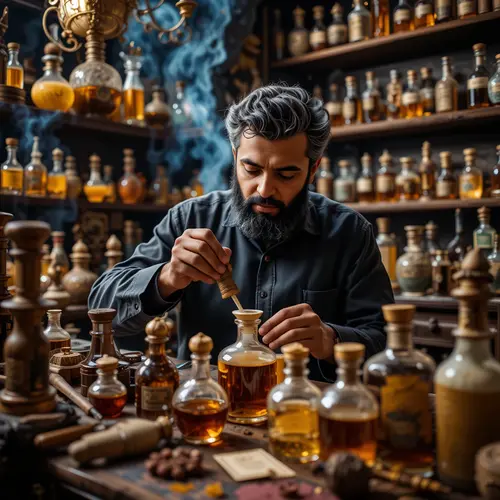
Did you know that the art of perfumery has roots stretching back to ancient Mesopotamia and Egypt, with significant advancements made in the Arab world? This article explores the rich history, exquisite ingredients, and profound cultural importance of Arabic perfumes, offering a fragrant glimpse into Middle Eastern traditions.
Aromatic History: Tracing the Origins of Arabic Perfumes
The story of Arabic perfumes is deeply intertwined with the history of trade, science, and culture in the Middle East. The Islamic Golden Age (8th-13th centuries) witnessed a flourishing of knowledge, including advancements in alchemy and chemistry, which were instrumental in refining perfume-making techniques. Renowned scientists like Jabir ibn Hayyan (Geber) made significant contributions to distillation and evaporation processes, laying the groundwork for modern perfumery. https://en.wikipedia.org/wiki/Historyofperfume
Arab traders played a crucial role in spreading perfumes and aromatic ingredients throughout the world. Frankincense and myrrh, highly valued resins from the Arabian Peninsula, were traded along the Silk Road and used in religious ceremonies and personal adornment. The use of rosewater, another significant contribution from the Arab world, became widespread in Europe during the Middle Ages. https://www.britannica.com/topic/perfume
Key Historical Developments:
- Advancements in Distillation: Arab chemists perfected distillation techniques, allowing for the extraction of pure essential oils. https://www.sciencehistory.org/distillations/episodes/alchemy
- Trade of Aromatic Ingredients: Arab traders controlled the trade routes for valuable ingredients like frankincense, myrrh, and spices. https://www.nationalgeographic.com/culture/article/silk-road-spices
- Introduction of Rosewater: The use of rosewater as a fragrance and flavoring agent spread from the Middle East to Europe. https://books.google.com/books/about/TheBookof_Perfumes.html?id=J6wWCgAAQBAJ
The Essence of the East: Signature Ingredients
Arabic perfumes are celebrated for their rich and complex compositions, often featuring a blend of traditional ingredients that evoke a sense of luxury and mystique.
Oudh (Agarwood): Known as “liquid gold,” oudh is a resinous wood derived from the Aquilaria tree. Its scent is warm, woody, and intensely aromatic, making it a prized ingredient in many high-end Arabic perfumes. The scarcity and complexity of oudh contribute to its high value. https://www.fragrantica.com/notes/Oud-Agarwood-40.html
Attar ( concentrated perfume oil): Attar is a natural perfume oil derived from botanical sources. Most commonly these oils are extracted via hydro or steam distillation. The distillates are then collected over a base of sandalwood oil. Sandalwood oil was traditionally used as the base as it is believed to ‘fix’ the fragrance and assist the blend to mature. Attars are traditionally single note fragrances and are not a blend of numerous ingredients as would be expected in contemporary perfumery. https://perfumesociety.com/ingredients-post/attar/
Rose and Jasmine: These floral notes are frequently used in Arabic perfumes to add a touch of sweetness and elegance. Rose, especially Damask rose, is highly prized for its intense fragrance. Jasmine, with its intoxicating aroma, is another popular choice. https://www.arabianoud.co.uk/blogs/news/rose-and-jasmine-in-arabic-perfumes
Cultural Significance: Perfume as a Way of Life
In Arab culture, perfume is more than just a fragrance; it is an integral part of daily life, social customs, and religious practices.
Hospitality: Offering perfume to guests is a sign of respect and hospitality. It is customary to burn incense (bakhoor) in homes and public spaces to create a welcoming and fragrant atmosphere. https://www.emirateswoman.com/life/culture/the-importance-of-perfume-in-arab-culture/
Religious Practices: Perfumes and fragrant oils are used in mosques and during religious ceremonies. The Prophet Muhammad (peace be upon him) emphasized the importance of cleanliness and fragrance, further cementing the role of perfume in Islamic tradition.
Personal Adornment: Perfumes are used by both men and women to enhance their personal appearance and express their individuality. The choice of fragrance often reflects personal taste, social status, and cultural identity.
The Art of Layering:
- Start with a base: Apply a moisturizing, unscented lotion to help the fragrance last longer.
- Apply the Oudh: Dab a small amount of oudh oil on pulse points like wrists and neck.
- Layer with Floral Notes: Add a touch of rose or jasmine attar to complement the oudh.
Frequently Asked Questions
Q: What makes Arabic perfumes different from Western perfumes?
A: Arabic perfumes often feature richer, more concentrated ingredients like oudh, attar, and spices, while Western perfumes tend to use lighter, more floral or citrusy notes. Arabic perfumes also have a longer-lasting scent due to the higher concentration of oils. https://www.ajmalperfume.com/blog/arabic-perfumes-vs-western-perfumes-what-are-the-differences
Q: How should I store Arabic perfumes to maintain their quality?
A: Store Arabic perfumes in a cool, dark place away from direct sunlight and heat. This will help preserve the fragrance and prevent the oils from degrading. It is also important to keep the bottle tightly closed to prevent evaporation.
Q: Can Arabic perfumes be worn by both men and women?
A: Yes, many Arabic perfumes are unisex and can be enjoyed by both men and women. The choice of fragrance ultimately depends on personal preference.
Conclusion:
Arabic perfumes offer a captivating sensory experience, inviting us to explore the rich cultural heritage of the Middle East. From the ancient traditions of perfumery to the exquisite ingredients that define these fragrances, there is much to discover and appreciate. Whether you are a seasoned perfume enthusiast or a curious explorer, the world of Arabic perfumes promises an unforgettable journey through scent.